We have an attention problem. The average person checks their phone 96 times a day — not because they need to, but because the device is engineered to make them. Blue light suppresses melatonin. Notifications keep the brain in reactive vigilance. Variable rewards create compulsive checking loops. Internal capacities like memory, imagination, and boredom tolerance atrophy from disuse.
The vicious loop looks like this: stress leads to checking, checking leads to stimulation, stimulation leads to later sleep, worse self-control, more checking. Repeat.
I started thinking about what it would look like to break that loop — not by going off-grid, but by separating capability from screen exposure.
txtinsted
Text a single number. Get things done.
txtinsted is an SMS-powered service that lets you interact with apps you normally need a smartphone for — all through plain text messages. No app. No browser. No smartphone required.
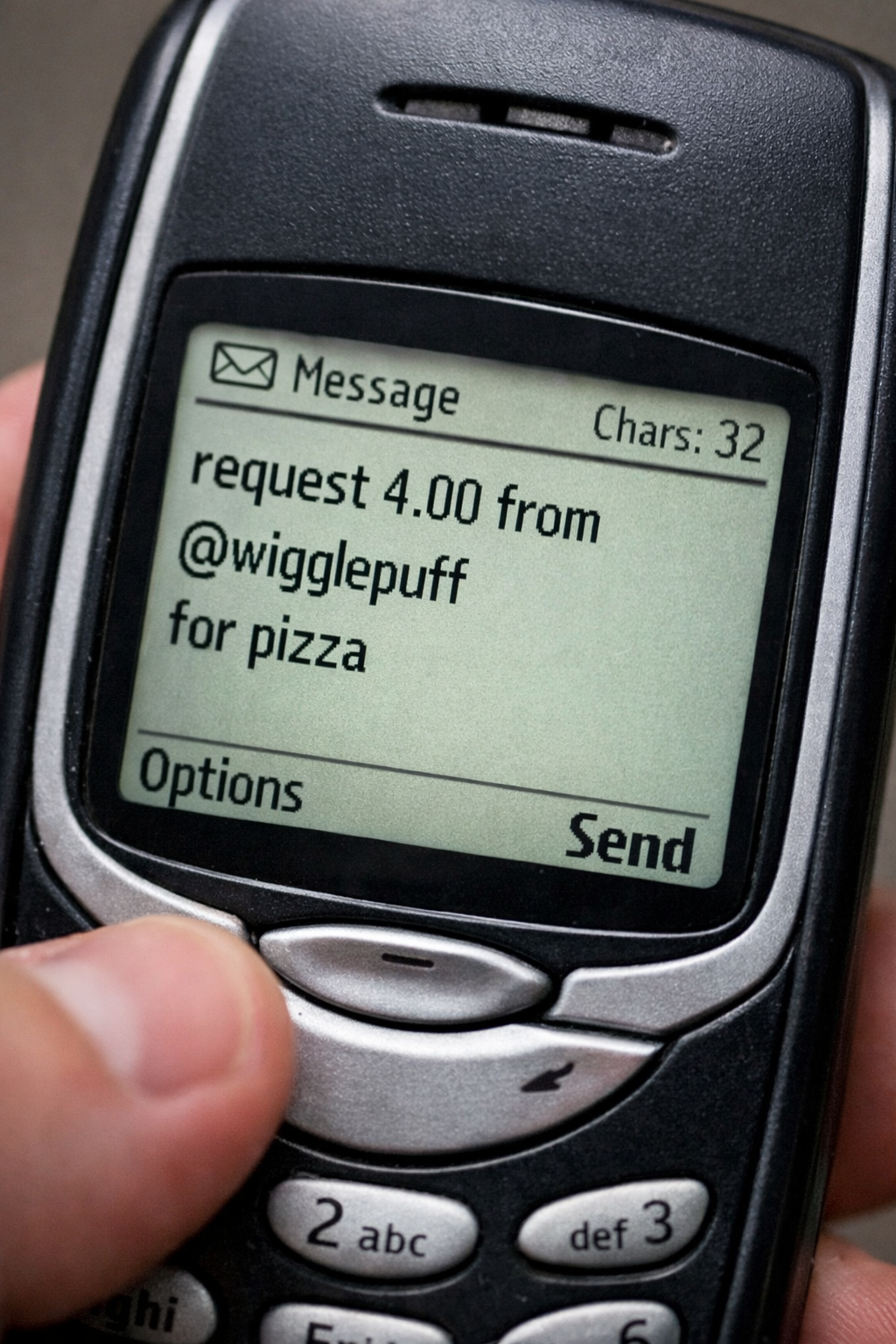
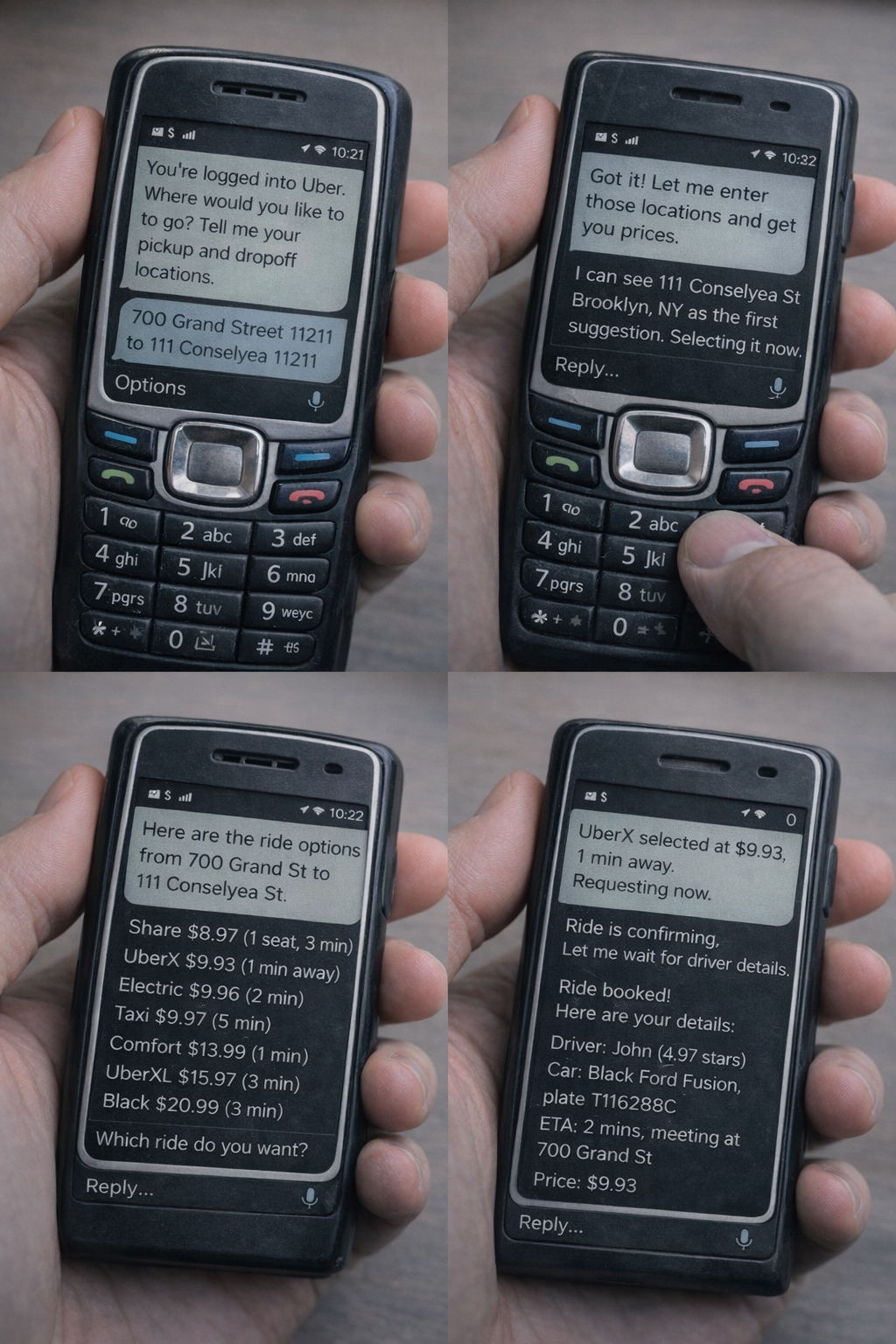
A few examples of what it can do:
"I need a ride to JFK" — You get Uber price quotes, booking confirmation, and driver details, all via text.
"send $20 to @maria for lunch" — Venmo payment, confirmed.
"bus time 402854" — Real-time NYC bus arrivals, seconds later.
How It Works
When you text a command, Twilio delivers the SMS to the txtinsted server. The server identifies the intent and the target service, then either uses a browser agent or a direct API call to execute the action. The result comes back as a text message.
The services available today:
- Uber — Book rides, get prices, driver details, ETA
- Venmo — Send and request payments by @username
- Cash App — Send and request payments by $cashtag
- NYC Transit — Real-time bus arrivals by stop code
The architecture is built to scale. Adding a new service is one registry entry.
The Interface Bottleneck
Every service today builds a separate UI for every platform. Uber has an iOS app, an Android app, a web app, a watch app, a car integration. So does Venmo. So does every other service. Every new device — AR glasses, smart rings, car dashboards — has to wait for every service to build a native integration.
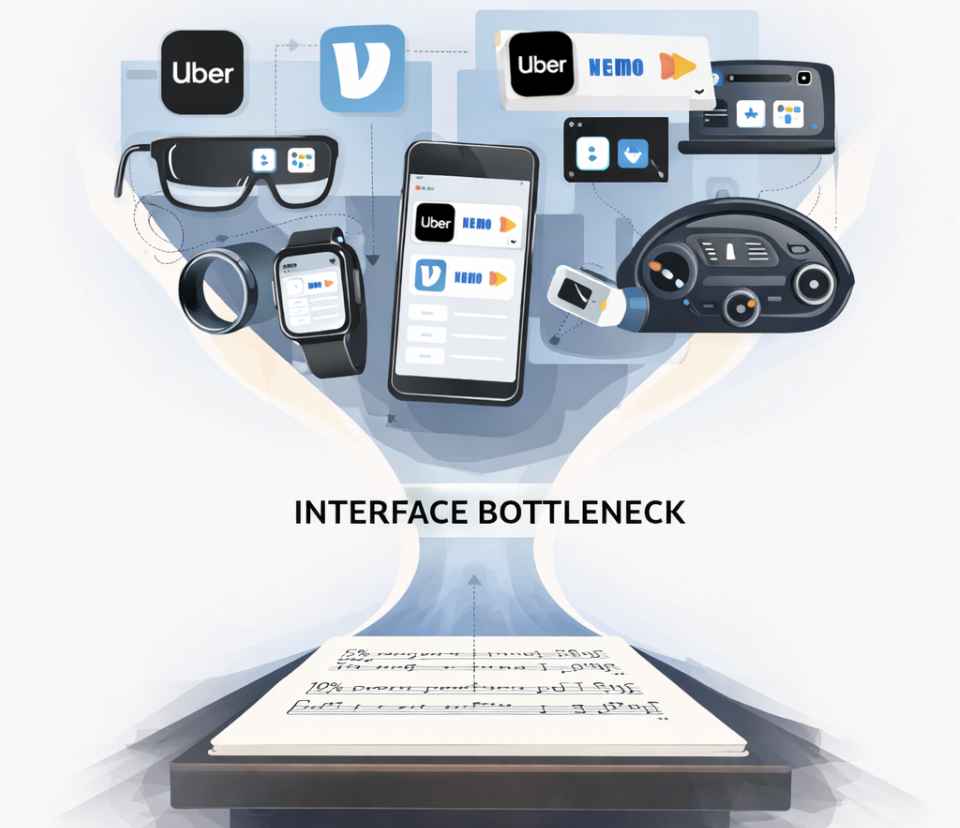
The smartphone acts as a bottleneck between services and devices.
Your smartwatch can only do 10% of what your phone can. That's not a hardware limitation — it's an interface bottleneck. What if the interface was just language?
Who It's For
Dumbphone users — by choice or circumstance. Elderly users who are familiar with texting but intimidated by apps. Low-income users who can't afford a smartphone or data plan. Digital minimalists who want fewer screens, not fewer capabilities. People in emergency situations — dead battery, cracked screen, no wifi. Developing markets where SMS exists but app ecosystems don't.
Accessibility isn't just compliance. If the interface is language — typed, spoken, or selected from a list — every device becomes an accessibility device. A braille display, a switch controller, a voice-only earbud, a flip phone. They all work. SMS is the most accessible interface that already exists everywhere.
Security
Credentials are encrypted with AES-256-GCM at rest and permanently deleted the moment login succeeds. Phone numbers are hashed, never stored in plain text. Setup links are one-time-use and expire in 15 minutes. All traffic runs over HTTPS with security headers via Helmet. Your info exists only as long as it's needed. Then it's gone.
What's Next
The next step is local auth — a lightweight desktop app that runs on your home computer. You log into services locally, in a browser you control. When you text a command, the server relays it to your machine via WebSocket. Your machine executes it and returns the result. The server never sees your password, session, or cookies.
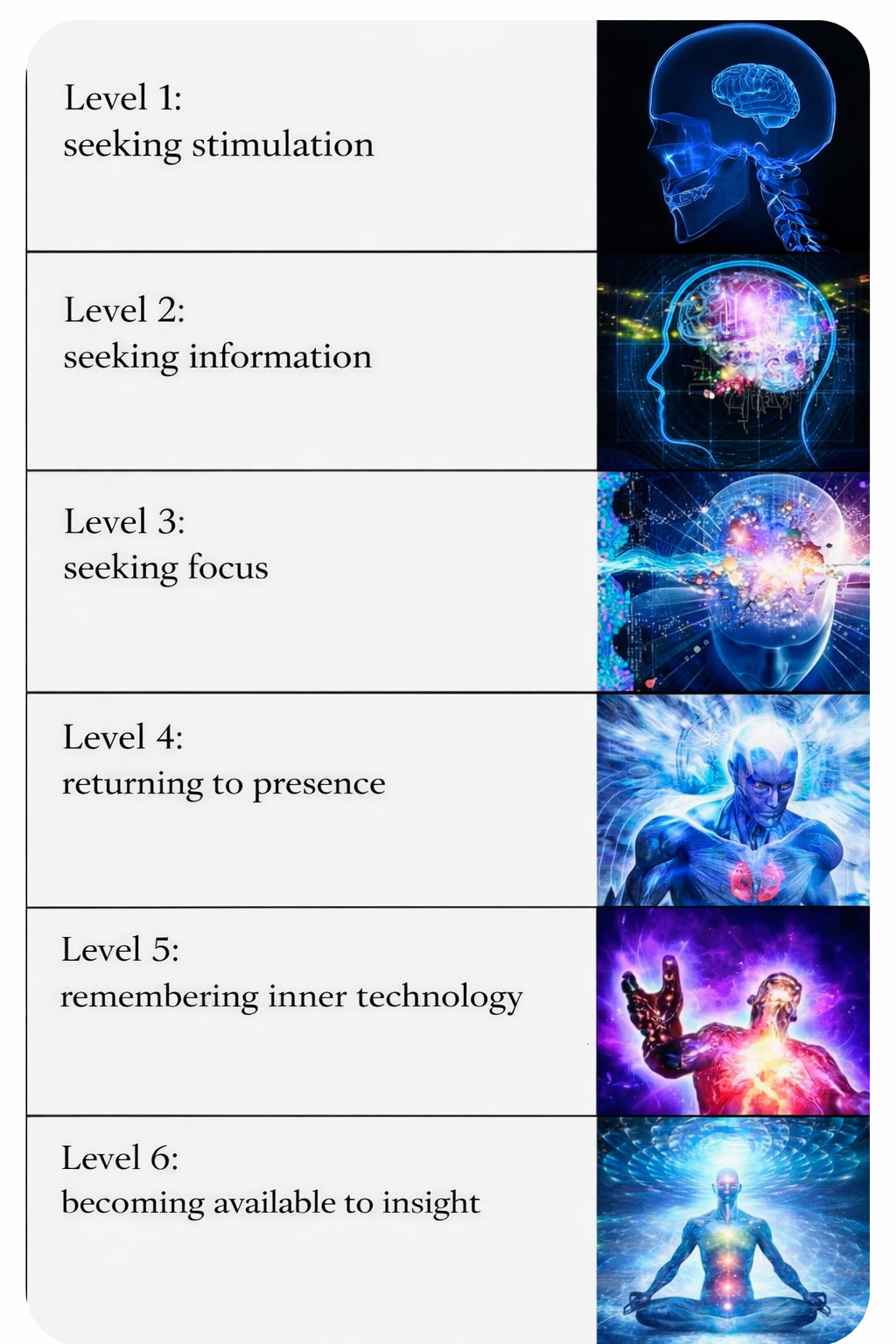
The deeper levels of attention that screens prevent us from reaching.
The Bigger Vision
What I've built is not just an SMS service. It's the earliest version of a universal command interface — an intent layer. Instead of services building UIs for every platform, they expose capabilities. Instead of devices building app integrations, they speak a command protocol. Any device that can send a message — text, voice, gesture, button press — can do anything.
A smart ring doesn't need an Uber app. It just needs to speak the protocol. Day one, it can do everything.
This is not anti-technology. It's pro-human technology. A healthy technology culture preserves human internal capacities instead of replacing them. It protects sleep instead of stealing it. It supports attention instead of auctioning it.
Try it: text "setup" to +1 (844) 936-0091, or visit txtinsted.com.